
 Image 1 of 3
 Image 2 of 3
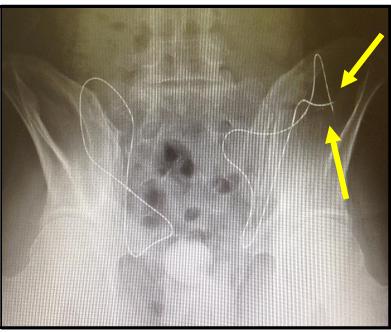 Image 3 of 3
Abstract
Beginning in 2011, the FDA reported failures in the stranded nitinol frame of a hernia repair device called the Rebound HRD. Dr. Rod Brown, MD, inventor of the device, asked the University of Minnesota Medical Devices Center to investigate these failures and help him develop an improved device. Before-and-after X-ray and DICOM images of in vivo frame failures were analyzed, in vivo loading of the nitinol frame was estimated, and the mode of failure was determined to be fatigue. Information on the testing and manufacturing methods of the existing product was collected. A proposed segmented frame design was prototyped and tested. Studies of fatigue life yielded recommendations for a higher nitinol austenite finish (Af) temperature, consideration of nitinol surface treatments, and surgical implantation guidelines to avoid high non-zero-mean strain conditions. A novel manufacturing process for the nitinol framed hernia repair device is offered.
Abstract
Beginning in 2011, the FDA reported failures in the stranded nitinol frame of a hernia repair device called the Rebound HRD. Dr. Rod Brown, MD, inventor of the device, asked the University of Minnesota Medical Devices Center to investigate these failures and help him develop an improved device. Before-and-after X-ray and DICOM images of in vivo frame failures were analyzed, in vivo loading of the nitinol frame was estimated, and the mode of failure was determined to be fatigue. Information on the testing and manufacturing methods of the existing product was collected. A proposed segmented frame design was prototyped and tested. Studies of fatigue life yielded recommendations for a higher nitinol austenite finish (Af) temperature, consideration of nitinol surface treatments, and surgical implantation guidelines to avoid high non-zero-mean strain conditions. A novel manufacturing process for the nitinol framed hernia repair device is offered.